05/01/2026
Kathmandu, May 1: The Embassy of India in Nepal marked Buddha Jayanti with a series of cultural, spiritual, and academic programmes in Lumbini, in collaboration with the Lumbini Development Trust and Lumbini Buddhist University.
The celebrations brought together diplomats, scholars, monks, artists, and local communities to commemorate the birth anniversary of Lord Buddha, highlighting his enduring message of peace, compassion, and harmony.
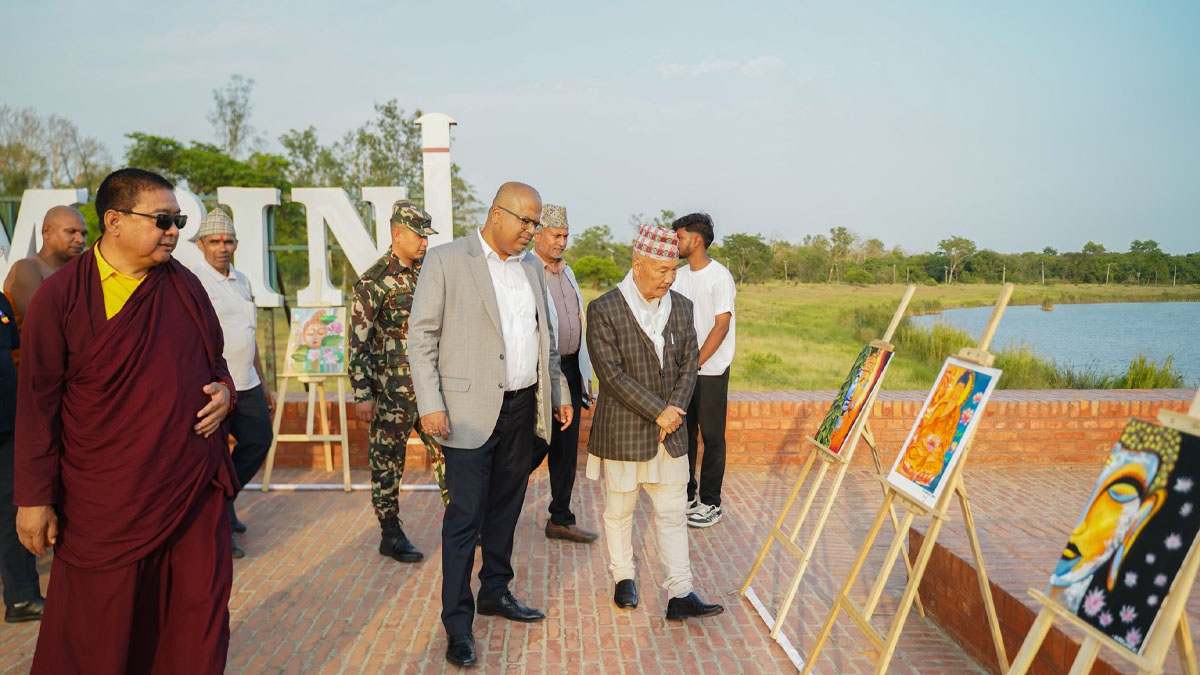
The event featured a diverse range of activities, including a painting exhibition by school students that reflected themes of peace, non-violence, and Buddhist philosophy. The exhibition provided a platform for young minds to express their understanding of Buddha’s teachings through art.
Spiritual elements formed a central part of the programme, with monks from Nepal and India jointly conducting prayer chanting ceremonies, creating an atmosphere of reflection and reverence at the sacred site.
A cultural evening added vibrancy to the celebrations, showcasing cross-cultural artistic exchanges. The programme included a Buddhism-themed Kathak dance performance by an Indian Council for Cultural Relations troupe led by Deepti Gupta, blending classical Indian dance with spiritual storytelling.
The audience was also treated to a musical presentation by a Nepali ensemble led by renowned sarod maestro Suresh Raj Bajracharya, reflecting the shared cultural heritage and artistic traditions between Nepal and India.
Governor of Lumbini Province Krishna Bahadur Gharti Magar attended the programme as the chief guest, underscoring the significance of Lumbini as a global center for peace and spiritual tourism.
As part of the broader celebrations, an academic symposium titled “Relevance of Buddha’s Teachings: Pathways to Peace, Harmony and Sustainable Development” was organized at Lumbini Buddhist University. Scholars and experts from both Nepal and India engaged in discussions on how Buddhist philosophy continues to offer solutions to contemporary global challenges, including conflict resolution, environmental sustainability, and social cohesion.
Speakers emphasized that Buddha’s teachings remain highly relevant in a world facing rising tensions and inequalities, calling for greater integration of these principles into modern governance, education, and international cooperation.
The event not only celebrated a significant religious occasion but also reinforced cultural and intellectual ties between Nepal and India, while promoting Lumbini as an international hub for dialogue, spirituality, and peace-building initiatives.






Tehran, June 21: As India presses ahead with Operation Sindhu to evacuate its citizens from Iran amid intensifying hostilities in the Middle East, the Indian Embassy in Tehran has announced that, upon formal requests from the governments of Nepal and Sri…
Kathmandu, Nov. 24: The joint training exercise "SURYA KIRAN-XVII" of Nepali Army and Indian Army is starting from 24 November 2023 in Pithoragarh, India. The Nepalese army team that will participate in the exercise, which will be attended by the…
New Delhi, May 5: Indian Prime Minister Narendra Modi will be the guest of honour for this year’s Bastille Day Parade in Paris scheduled to take place on July 14. In a statement, the Ministry of External Affairs (MEA) of…