10/28/2025
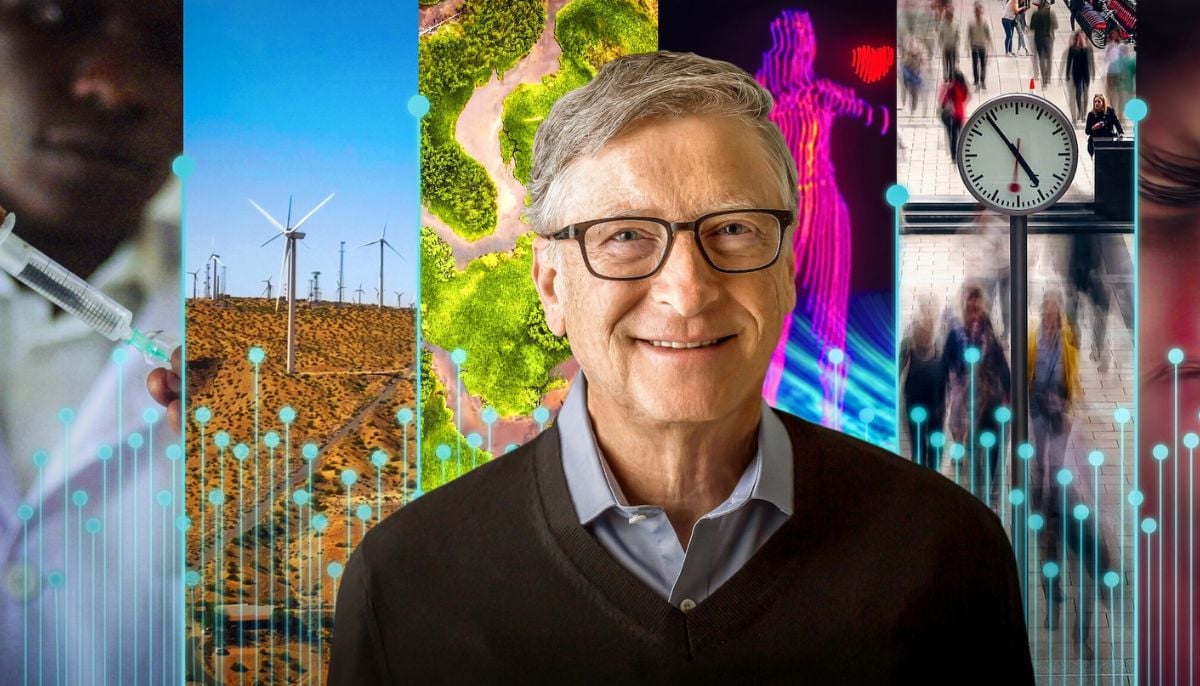
New York, Oct. 28: Bill Gates thinks climate change is a serious problem but it won’t be the end of civilization. He thinks scientific innovation will curb it, and it’s instead time for a “strategic pivot” in the global climate fight: from focusing on limiting rising temperatures to fighting poverty and preventing disease.
A doomsday outlook has led the climate community to focus too much on near-term goals to reduce emissions of carbon dioxide and other greenhouse gases that cause warming, diverting resources from the most effective things that can be done to improve life in a warming world, Gates said.
In a memo released Tuesday, Gates said the world’s primary goal should instead be to prevent suffering, particularly for those in the toughest conditions in the world’s poorest countries.
If given a choice between eradicating malaria and a tenth of a degree increase in warming, Gates told reporters, “I’ll let the temperature go up 0.1 degree to get rid of malaria. People don’t understand the suffering that exists today.”
The Microsoft co-founder spends most of his time now on the goals of the Gates Foundation, which has poured tens of billions of dollars into health care, education and development initiatives worldwide, including combating HIV/AIDS, tuberculosis and malaria. He started Breakthrough Energy in 2015 to speed up innovation in clean energy.
He wrote his 17-page memo hoping to have an impact on next month’s United Nations climate change conference in Brazil. He’s urging world leaders to ask whether the little money designated for climate is being spent on the right things.
Gates, whose foundation provides financial support for Associated Press coverage of health and development in Africa, is influential in the climate change conversation. He expects his “tough truths about climate” memo will be controversial.
“If you think climate is not important, you won’t agree with the memo. If you think climate is the only cause and apocalyptic, you won’t agree with the memo,” Gates said during a roundtable discussion with reporters ahead of the release. “It’s kind of this pragmatic view of somebody who’s, you know, trying to maximize the money and the innovation that goes to help in these poor countries.”
Every bit of additional warming correlates to more extreme weather, risks species extinction and brings the world closer to crossing tipping points where changes become irreversible, scientists say.
University of Washington public health and climate scientist Kristie Ebi said she thoroughly agrees with Gates that the U.N. negotiations should focus on improving human health and well-being. But, she said, Gates assumes the world stays static and only one variable changes — faster deployment of green technologies — to curb climate change. She called that unlikely.
Jeffrey Sachs, director of the Center for Sustainable Development at Columbia University, called the memo “pointless, vague, unhelpful and confusing.”
“There is no reason to pit poverty reduction versus climate transformation. Both are utterly feasible, and readily so, if the Big Oil lobby is brought under control,” he wrote in an email.
Stanford University climate scientist Chris Field said there is room for a healthy discussion about whether the current framing of the climate crisis is typically too pessimistic.
“But we should also invest for both the long term and the short term,” he wrote in an email. “A vibrant long-term future depends on both tackling climate change and supporting human development.”
Princeton University climate scientist Michael Oppenheimer said he doesn’t dispute the principle of making human well-being the primary objective of policy, but what about the natural world?
“Climate change is already wreaking havoc there,” he wrote in an email. “Can we truly live in a technological bubble? Do we want to?”
Gates is clear in his memo that every tenth of a degree of warming matters: “A stable climate makes it easier to improve people’s lives.”
A decade ago, the world agreed in a historic pact known as the Paris agreement to try to limit human-caused warming to 1.5 degrees Celsius (2.7 degrees Fahrenheit) since pre-industrial times. The goal: to stave off nastier heat waves, wildfires, storms and droughts.
In a 2021 book, Gates laid out a plan for reducing emissions to avoid a climate disaster. But humans are on track to release so much greenhouse gas by early 2028 that scientists say crossing that 1.5-degree threshold is now nearly unavoidable.
Breakthrough Energy focuses on areas where the cost of doing something cleanly is much higher than the polluting way, such as making clean steel and cement. Gates concluded his memo by saying governments should work toward driving this difference to zero, and be rigorous about measuring the impact of every effort in the world’s climate agenda.
Gates said the pace of innovation in clean energy has been faster than he expected, allowing cheap solar and wind energy to replace coal, oil and natural gas plants for electricity and averting worst-case warming scenarios. Artificial intelligence is helping accelerate advances in clean energy technologies, he added.
At the same time, money to help developing countries adapt to climate change is shrinking. Led by the United States, rich countries are cutting their foreign aid budgets. President Donald Trump has called climate change a hoax.
Gates criticized the aid cuts. He said Gavi, a public-private partnership started by his philanthropic foundation that buys vaccines, will have 25% less money for the next five years compared to the past five years. Gavi can save a life for a little more than $1,000, he added.
Vaccines become even more important in a warming world because children who aren’t dying of measles or whooping cough will be more likely to survive when a heat wave hits or a drought threatens the local food supply, he wrote.
Health and prosperity are the best defense against climate change, Gates said, citing research from the University of Chicago Climate Impact Lab that found projected deaths from climate change fall by more than 50% when accounting for the expected economic growth over the rest of this century.
Under these circumstances, he thinks the bar must be “very high” for what’s funded with aid money.
“If you have something that gets rid of 10,000 tons of emissions, that you’re spending several million dollars on,” he said, “that just doesn’t make the cut.”-Agencies



Tehran, June 21: As India presses ahead with Operation Sindhu to evacuate its citizens from Iran amid intensifying hostilities in the Middle East, the Indian Embassy in Tehran has announced that, upon formal requests from the governments of Nepal and Sri…
Kathmandu, Nov. 24: The joint training exercise "SURYA KIRAN-XVII" of Nepali Army and Indian Army is starting from 24 November 2023 in Pithoragarh, India. The Nepalese army team that will participate in the exercise, which will be attended by the…

New Delhi, May 5: Indian Prime Minister Narendra Modi will be the guest of honour for this year’s Bastille Day Parade in Paris scheduled to take place on July 14. In a statement, the Ministry of External Affairs (MEA) of…