04/03/2026
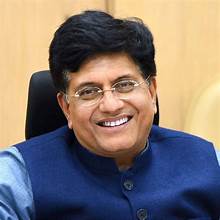
New Delhi, Apr. 3: For the first time since India pulled out of the China-led Regional Comprehensive Economic Partnership (RCEP) negotiations in 2019, Commerce and Industry Minister Piyush Goyal held bilateral talks with his Chinese counterpart Wang Wentao on the sidelines of the 14th World Trade Organisation (WTO) interministerial conference in Cameroon last week.
“I also met, after a long time, the minister from China with whom we discussed ways to expand trade, move towards more balanced trade and generate trust to help smooth bilateral trade between China and India and give greater opportunity for our exporters to export our pharmaceuticals, engineering goods, fish and farm products. All in all, a good start to generating greater opportunities for our exporters in China,” Goyal said Thursday while speaking about bilateral engagements at the WTO.
According to the Indian Media, The talks between the two ministers come at a time when trade tensions between the two countries, simmering since 2020, have been showing signs of easing. While China has eased restriction of rare earth magnets and stepped up imports of Indian goods, Delhi has also moderated its restrictions on Chinese investments.
However, India has maintained its opposition to a China-led proposal at the WTO. After South Africa lifted its opposition to the Investment Facilitation for Development (IFD), India was the only country blocking the investment agreement.
“India has successfully been able to ensure that a plurilateral like Investment Facilitation for Development (IFD) cannot be brought into the Annexure 4 of the Marrakesh agreement,” Goyal said.
“It is important that we do not let issues which are not a part of the mandate of the WTO creep into the WTO agreement. And, therefore, India stood on its principles and what we believe is right. But because of that, it has not changed the dimension of our multifaceted relationship with any other set of countries or any other country,” he said, adding that proper guardrails should come into the plurilateral agreement.
The China-backed IFD agreement aims to improve the investment climate and promote international cooperation to facilitate the flow of foreign direct investment among WTO members by aligning facilitating policies with global benchmarks. Support for the agreement has grown rapidly. Since it was first discussed in 2017, support for the agreement grew from 70 countries to 128 (out of 166 WTO members) as of last year. During the ministerial meeting that concluded last week, India was the only country opposing it.
India has maintained that incorporating the IFD through a plurilateral route raises broader questions about the WTO’s future, which is traditionally based on multilateralism and consensus.
New Delhi-based think tank Research and Information System for Developing Countries (RIS) said the IFD has additional strategic considerations for India. The report said its significant feature is its overlap with Chinese connectivity and infrastructure initiatives, especially the Belt and Road Initiative (BRI). Of the 128 IFD participants, 98 are also members of China’s flagship BRI.
India-China relations had taken a hit following Chinese incursions along the Line of Actual Control in eastern Ladakh, more so after the Galwan Valley clash in June 2020. A month before the clash, India had imposed restrictions on investments from China through Press Note 3 (PN3) in April 2020, making government approval mandatory for investments from countries sharing a land border with India.
The move was aimed at preventing opportunistic takeovers during the Covid-19 pandemic and had remained in force amid heightened national security concerns following the Galwan clash.
Last month, the government set a 60-day deadline for processing and deciding investment proposals from countries sharing a land border in specified manufacturing sectors.
The PN3 was primarily meant for Chinese investors, as entities of Bangladesh and Pakistan can invest only under the government route, while investments from other border-sharing countries, such as Nepal, Myanmar, Bhutan and Afghanistan, are very small as a share of India’s total foreign investment inflows.
The Indian Express last month reported that the Tunnel Boring Machine (TBM) for India’s maiden bullet train project is set to arrive in Mumbai, marking a major step forward for the 21-km tunnel stretch of the Mumbai- Ahmedabad High Speed Rail (MAHSR) project.
The long-awaited machine, designed to excavate tunnels, is required to complete the tunnel in Mumbai for the project. The 3,000-tonne machine is supplied by German company Herrenknecht.
The availability of the machine had been a concern for Delhi because China was blocking its export to India.
In 2024, Goyal had confronted a German minister regarding the blocking of the machine. In a video of an interaction between Goyal and Germany’s Vice Chancellor Robert Habeck during a Metro train ride in Delhi, the Commerce Minister was heard telling Habeck that India was to get some TBMs from Herrenknecht that the company was making in China, but China was not allowing the sale of those machines to India.
A spokesperson for Herrenknecht later told The Indian Express, “For several months now, we have been observing extraordinary circumstances in the customs clearance processes for machines to be delivered from China to India. These are hindering us from fulfilling our delivery obligations as expected and, in some cases, entirely.”


Tehran, June 21: As India presses ahead with Operation Sindhu to evacuate its citizens from Iran amid intensifying hostilities in the Middle East, the Indian Embassy in Tehran has announced that, upon formal requests from the governments of Nepal and Sri…
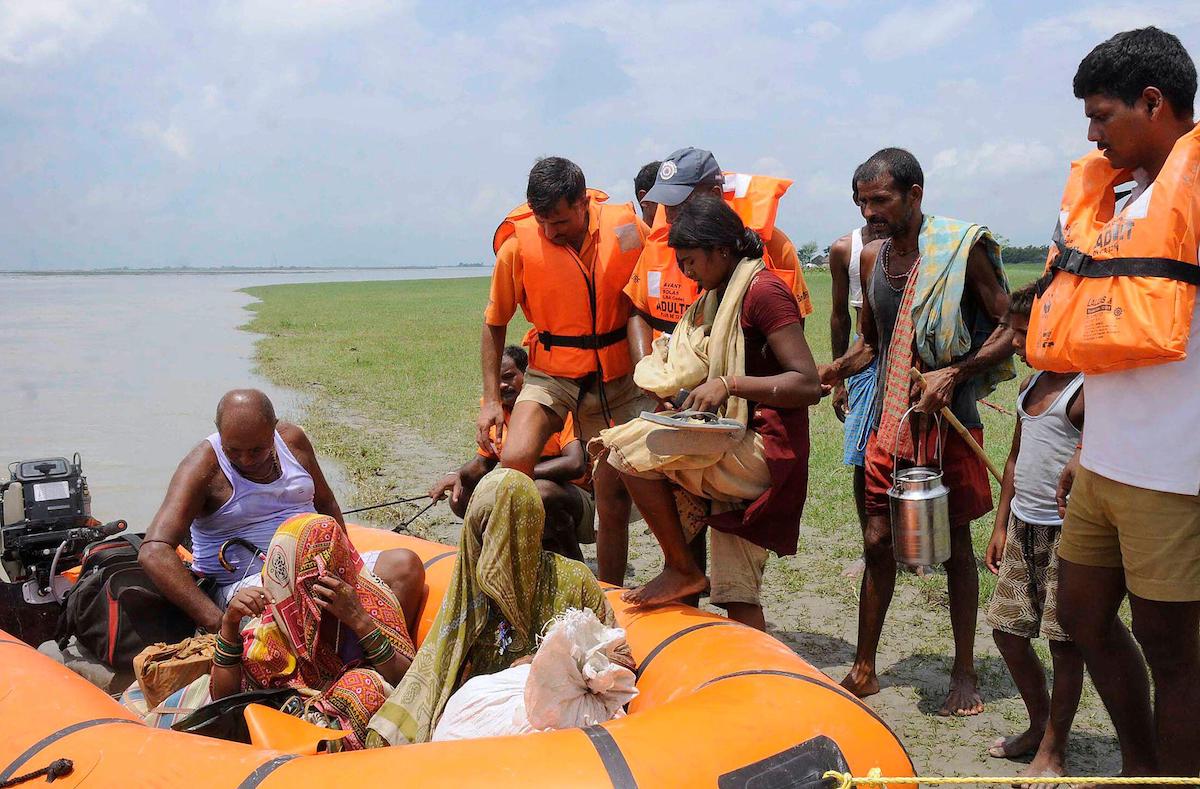
Kathmandu, Nov. 24: The joint training exercise "SURYA KIRAN-XVII" of Nepali Army and Indian Army is starting from 24 November 2023 in Pithoragarh, India. The Nepalese army team that will participate in the exercise, which will be attended by the…
New Delhi, May 5: Indian Prime Minister Narendra Modi will be the guest of honour for this year’s Bastille Day Parade in Paris scheduled to take place on July 14. In a statement, the Ministry of External Affairs (MEA) of…