07/23/2026
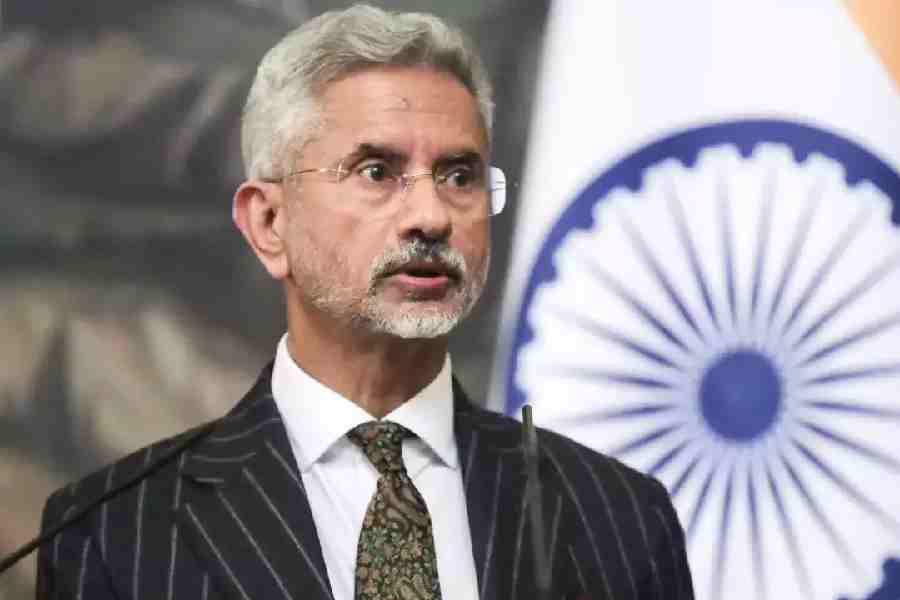
New Delhi, July 23: Stable India-China relations will help foster a “multi-polar Asia” and a “multi-polar world”, Indian External Affairs Minister S. Jaishankar said during a meeting with his Chinese counterpart Wang Yi in Manila. The meeting took place before the Foreign Ministers of the Quad countries, Australia, India, Japan, and the U.S., met on the sidelines of the 59th ASEAN Foreign Ministers’ Meeting in the Philippine capital and reiterated their support for stability in the Indo-Pacific region. In a separate meeting with Russian Foreign Minister Sergey Lavrov, held days after four Indian seafarers were killed in a Russian projectile strike in the Black Sea, Jaishankar expressed “strong concern” regarding the safety of Indian seafarers.
“We believe that a stable and cooperative relationship can best be developed on the basis of mutual respect, mutual interest and mutual sensitivity. Such a relationship can make a valuable contribution to a multi-polar Asia and a multi-polar world,” Jaishankar said in his remarks, highlighting that “peace and tranquillity in the border areas is obviously the pre-requisite for normal ties.”
The comments came against the backdrop of renewed India-China engagement, including the resumption of direct flights, updates to the visa regime, the restart of the Kailash Manasarovar Yatra, and the resumption of border trade. In this context, Mr. Jaishankar said, “... the steps in normalisation taken over the last few months must be welcomed.” Jaishankar referred to Prime Minister Narendra Modi and President Xi Jinping’s meeting in Kazan in October 2024 and recalled that the two leaders had “agreed that differences should not become disputes”. “It is the duty of diplomacy to properly manage them,” he said. He also raised the importance of “predictability of supply chains” and “fair market access”, which need to be addressed.
According to the Indian Media, The India-China ministerial discussion was followed by the meeting of Foreign Ministers of the Quad countries, Australia, India, Japan, and the U.S. on the sidelines of the 59th ASEAN Foreign Ministers’ Meeting in the Philippine capital that reiterated their support for stability in the Indo-Pacific region
The Indian Ministry of External Affairs issued a joint press release on cooperation between the Quad members and the ASEAN countries, stating, “As ASEAN Comprehensive Strategic Partners we, the Secretary of State of the United States and the Foreign Ministers of Australia, India and Japan met today in Manila to reaffirm our commitment to strengthening a free and open Indo-Pacific and our unwavering support for ASEAN unity and centrality.” The Ministers discussed the ASEAN Outlook on the Indo-Pacific (AOIP), transnational security, economic opportunities, critical and emerging technologies, and HADR (Humanitarian Assistance and Disaster Relief).
The expression of support for the ASEAN member countries came three days after a maritime confrontation between the Philippine Navy and the China Coast Guard at the Ren’ai Reef in the South China Sea. Both sides have accused each other of aggression at the Ren’ai Reef. China has summoned Manila’s Ambassador to Beijing and lodged a protest against what it described as a “deliberate provocation”. Earlier, on July 6, China test-fired a long-range missile from a submarine in the South China Sea. The missile flew over the Philippines, drawing concern from regional countries, including Australia.
The Quad Foreign Ministers also reiterated their support for stability in the Indo-Pacific maritime domain.
Jaishankar held an “in-depth review” of India-Russia bilateral relations with Lavrov and expressed “strong concern regarding the safety of Indian seafarers in the region”.
“Discussed various aspects of our partnership including trade and investment, energy and connectivity, science and technology and mobility,” said Jaishankar about his meeting with Lavrov, which came days after four Indian seafarers were killed in a Russian projectile strike on a merchant vessel near Odesa. The two Ministers, accompanied by other diplomats, also exchanged views on the Ukraine crisis and the situation in the Gulf.
After meeting U.S. Secretary of State Marco Rubio, Jaishankar said the two sides discussed “trade and tariffs, energy, defence and security, critical minerals and artificial intelligence”.
Jaishankar also met counterparts from the ASEAN region, including Philippine Foreign Secretary Theresa P. Lazaro. Following the meeting, both Jaishankar and Lazaro referred to defence and maritime security as key areas of bilateral cooperation. India has delivered the BrahMos supersonic cruise missile to the Philippines.



Tehran, June 21: As India presses ahead with Operation Sindhu to evacuate its citizens from Iran amid intensifying hostilities in the Middle East, the Indian Embassy in Tehran has announced that, upon formal requests from the governments of Nepal and Sri…
Kathmandu, Nov. 24: The joint training exercise "SURYA KIRAN-XVII" of Nepali Army and Indian Army is starting from 24 November 2023 in Pithoragarh, India. The Nepalese army team that will participate in the exercise, which will be attended by the…
New Delhi, May 5: Indian Prime Minister Narendra Modi will be the guest of honour for this year’s Bastille Day Parade in Paris scheduled to take place on July 14. In a statement, the Ministry of External Affairs (MEA) of…