01/22/2026
Kathmandu, Jan. 22: A Memorandum of Understanding (MoU) has been signed between Nepal and India to exchange advance information on goods to be exported between the two countries. This understanding, aimed at further strengthening trade facilitation and making customs control more effective, is expected to add a new dimension to the economic relations between the two neighbors.
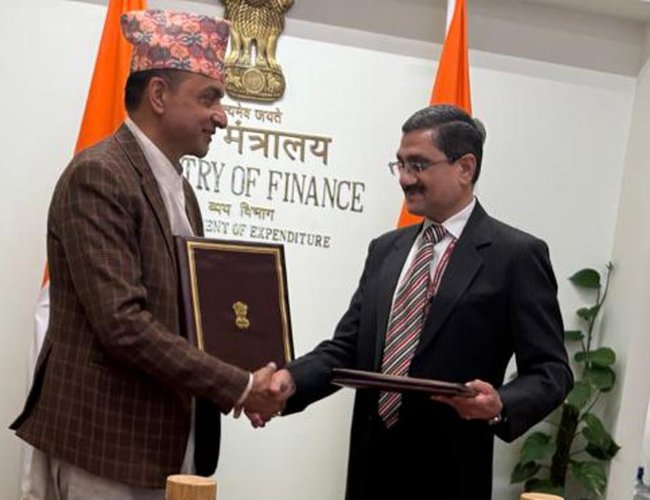
The MoU was signed during a formal program held in New Delhi on Wednesday (Magh 7) by Shyam Prasad Bhandari, Director General of Nepal’s Department of Customs, on behalf of Nepal, and Vivek Chaturvedi, Chairman of India’s Central Board of Indirect Taxes and Customs (CBIC), on behalf of India. Approved by Nepal’s Council of Ministers, the agreement was finalized following discussions among stakeholders from both countries.
Once implemented, the arrangement is expected— in line with international practice— to reduce trade costs through risk management and minimize delays at border checkpoints. In this context, Finance Minister Rameshwar Khanal, writing in a Facebook status about the agreement, stated: “Once this understanding on advance notification of goods exports with India is implemented, customs facilitation will improve and revenue leakage will be better controlled.”
Speaking at the signing ceremony, Director General Bhandari said that the agreement would further strengthen relations between the customs administrations of the two countries. He emphasized the need to implement the arrangement as soon as possible.
Similarly, CBIC Chairman Vivek Chaturvedi, representing the Indian side, said it was a matter of pleasure to enter into such an understanding with Nepal and expressed full commitment to its swift implementation. Senior customs officials from both Nepal and India were present at the event.
Exchange of data on goods electronically before their arrival.
Monitoring of suspicious goods based on risk analysis, while compliant traders will receive faster and more streamlined customs clearance.
Reduction in time required for customs procedures and assurance of secure international trade.
Initially, the system will be implemented on a pilot basis for selected goods, and following its success, it will be expanded to cover all goods.
In the event of any disputes during implementation, they will be resolved through diplomatic channels by mutual agreement, and provisions allow for amendments to the MoU as necessary.


Tehran, June 21: As India presses ahead with Operation Sindhu to evacuate its citizens from Iran amid intensifying hostilities in the Middle East, the Indian Embassy in Tehran has announced that, upon formal requests from the governments of Nepal and Sri…

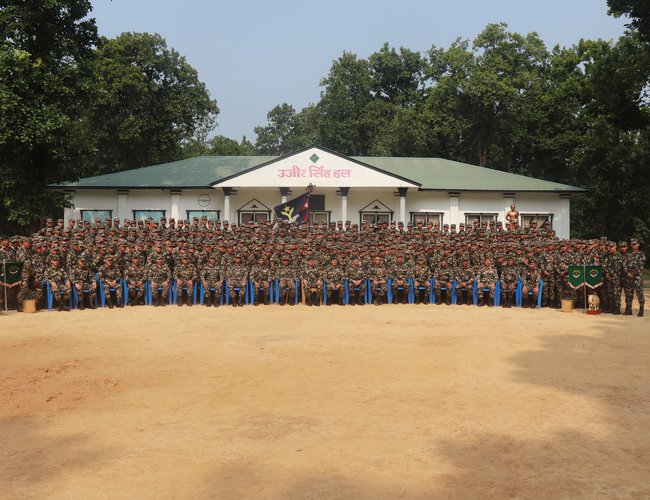
Kathmandu, Nov. 24: The joint training exercise "SURYA KIRAN-XVII" of Nepali Army and Indian Army is starting from 24 November 2023 in Pithoragarh, India. The Nepalese army team that will participate in the exercise, which will be attended by the…
New Delhi, May 5: Indian Prime Minister Narendra Modi will be the guest of honour for this year’s Bastille Day Parade in Paris scheduled to take place on July 14. In a statement, the Ministry of External Affairs (MEA) of…