07/01/2026
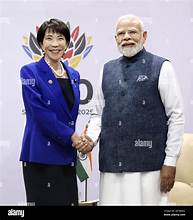
New Delhi, July 1: Japanese Prime Minister Sanae Takaichi arrives in India on Wednesday on her maiden visit, in what is being described as a reflection of the shared commitment of both countries to strengthen their special bond.
According to the Indian Media, Here is what to know about this special strategic partnership over the years.
During her three-day visit, Takaichi will participate in the 16th edition of the India-Japan Annual Summit, a mechanism established in 2006 under which the prime ministers of the two countries meet annually, each alternating as host.
The summit follows Indian PM Narendra Modi’s visit to Tokyo in August 2025 for the 15th edition, during which the two countries reaffirmed their commitment to deepening cooperation across strategic, economic, technological and security domains.
A large business delegation accompanies her, and the two leaders will also attend business events with executives from both countries. According to government statistics, around 1,400 Japanese companies operate in India, with nearly half of them in the manufacturing sector.
Meanwhile, bilateral trade reached $27.5 billion in 2025-26, with Japanese investment in India going up to $3.2 billion between April and December 2025.
Japan is among India’s largest investors, backing major infrastructure projects including a high-speed rail corridor between Mumbai and Ahmedabad. Japanese firms have also increased investments in Indian companies, including a recent $1.6 billion deal for a 20% stake in Yes Bank.
“The summit will provide an opportunity for both sides to review and strengthen the full spectrum of bilateral cooperation as well as exchange views on regional and global issues of mutual interest,” the Ministry of External Affairs said last week, while announcing Takaichi’s visit. The visit is focused on boosting trade, investment and strategic cooperation between the two Asian partners, said the Japanese foreign ministry.
India-Japan relations provide a strategic and economic counterweight to China’s growing dominance in the region. The leaders will also discuss security cooperation and efforts to advance a free and open Indo-Pacific. India and Japan are members of the Quad grouping alongside the United States and Australia, and have steadily expanded defence and strategic collaboration in recent years.
Modi and Takaichi had met earlier this month on the sidelines of the 52nd G7 Summit in France and discussed enhancing economic cooperation with a focus on trade and investment.
The India-Japan ties are based on cooperation across eight key pillars — economy, economic security, mobility, environment, technology and innovation, healthcare, people-to-people exchanges, and state-prefecture engagement.
The state-prefecture cooperation has expanded to add even greater depth and diversity to the bilateral relationship. In 2025-26, the Chief Ministers of Haryana, Punjab and Uttar Pradesh made official visits to Japan and engaged with their counterparts, while governors of several Japanese prefectures have also visited India. This has culminated in the launch of the India-Japan Governors Network in February 2026.
Japan is the only country with which India has a dedicated institutional mechanism for the development of the North-East – the India-Japan Act East Forum. India and Japan are partnering on connectivity and development in Northeast India, including projects in infrastructure, urban renewal, energy, agriculture, tourism and skills.
The North-East fits into Japan’s vision of a free and open Indo-Pacific as a bridge connecting South Asia with Southeast Asia. During his speech at the Kizuna Conclave in Shillong in February 2026, Japanese State Minister for Foreign Affairs Iwao Horii said, “Northeast India is a region where India’s ‘Act East’ policy, promoted by Prime Minister Modi, and Japan’s vision of a ‘Free and Open Indo-Pacific’ are put into practice.”
Guwahati was initially among the possible venues considered for the visit, but was later ruled out due to “logistical issues”. Still, Japanese Ambassador Ono Keiichi, called up Assam Chief Minister Himanta Biswa Sarma, reaffirming that the two sides will further strengthen collaboration across key sectors like electronics, semiconductor and entrepreneurship, Sarma said.
Several incoming and outgoing high-level visits between the North-East and Japan have taken place since 2025. In May 2025, the then-Speaker of the House of Representatives, Fukushiro Nukaga, visited Assam and met the Chief Minister and Governor. He also visited IIT Guwahati and the Tata Semiconductor Assembly and Test Facility.
A delegation from Kagawa Prefecture, led by Vice Governor Oyama Satoshi, visited Manipur in December 2025. The delegation held meetings with several government officials, including the Chief Secretary, and explored human resource collaboration in areas such as nursing care and hospitality.
The Chief Minister of Meghalaya visited Japan in April this year, and an MoU was signed for the skill training and employment of 5,000 youth from the state. The CMs of Nagaland and Assam have also been on official visits to Japan.
India and Japan share a long-standing friendship rooted in centuries of cultural and civilisational exchange, spiritual affinity, and shared values of freedom, democracy and respect for the rule of law. However, ties have gained specific focus and traction over the last decade when the relationship was elevated to a Special Strategic and Global Partnership in 2014.
The relationship was launched as a Global Partnership in 2000, upgraded to a Strategic and Global Partnership in 2006, and elevated to a Special Strategic and Global Partnership in 2014 during the Summit between PM Modi and former PM Shinzo Abe.
As the two countries approach the 75th anniversary of the establishment of diplomatic relations in 2027, cooperation continues to deepen across a wide range of sectors, including trade and investment, economic security, defence and security, science and technology, culture, and people-to-people ties. The bilateral framework now comprises over 70 dialogue mechanisms.
The relationship is also marked by frequent high-level political engagement. Apart from annual summits, high-level exchanges and meetings regularly take place at the levels of Foreign Minister, Defence Minister, NSA, Foreign Secretary/Vice Minister, among others.
Key mechanisms include the 2+2 Foreign and Defence Ministers’ Meeting, Foreign Ministers’ Strategic Dialogue, Foreign Secretary–Vice Minister Dialogue, Defence Ministerial Meeting, Economic Security Dialogue, and the Act East Forum.
As the world battles issues such as supply chain disruptions and shortage of critical minerals, economic security and technology have emerged as key pillars of the relationship. During the 1st Economic Security Dialogue held in Tokyo in November 2024, the two sides identified five sectors as priority sectors for strategic collaboration: semiconductors, critical minerals, pharmaceuticals, clean energy and information and communication technology.
India and Japan entered into a Memorandum of Cooperation in the Field of Mineral Resources in August 2025, with the first joint working group under the MoC held virtually in April this year. A Memorandum of Cooperation on Semiconductor Supply Chains was signed in July 2023.
The Japan-India AI Cooperation Initiative was launched in 2025. Towards this end, the 1st India-Japan Strategic AI Dialogue was held this year.
High-level defence exchanges have also been regular. The Joint Declaration on Security Cooperation was signed during the Annual Summit in August 2025.
Japan participates in several bilateral exercises with India, including JAIMEX, Dharma Guardian, Veer Guardian, and bilateral Coast Guard Drills, as well as in multilateral exercises such as MALABAR and MILAN. Defence equipment and technology cooperation has also progressed, including the signing of a Memorandum of Implementation for the transfer of the UNICORN Mast in November 2024.



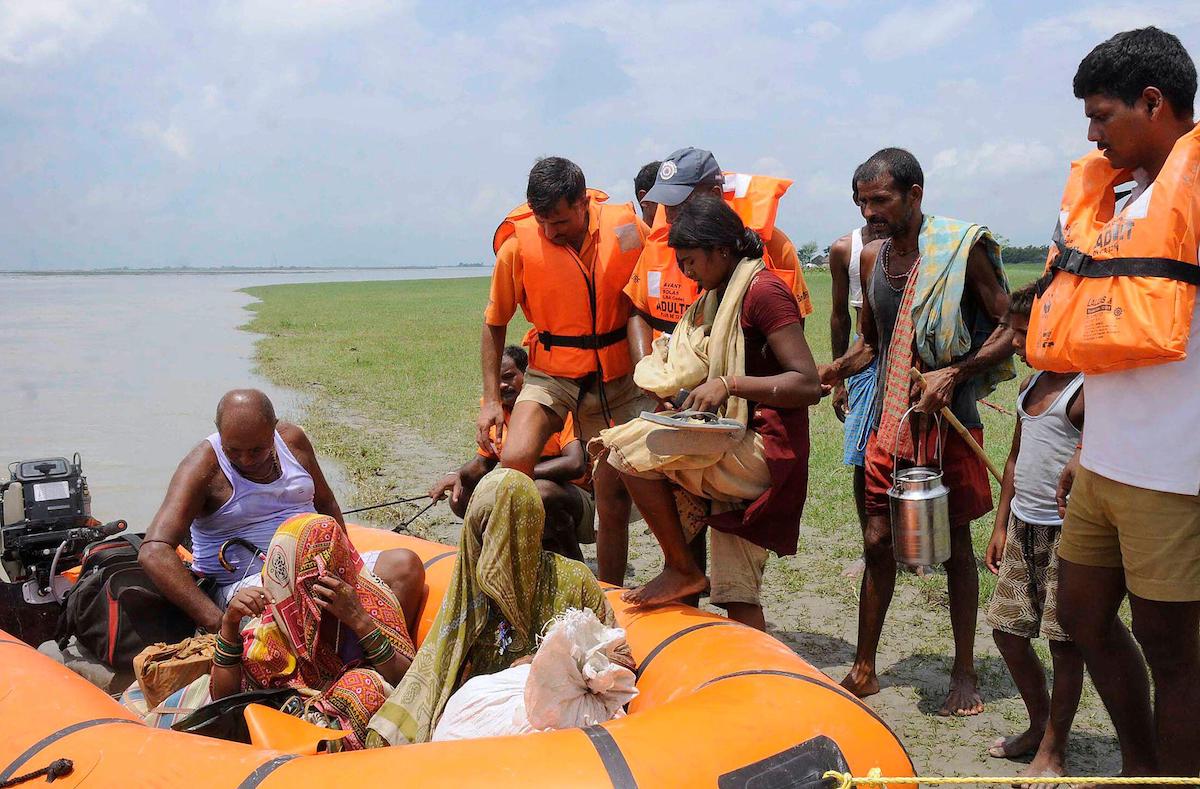
Tehran, June 21: As India presses ahead with Operation Sindhu to evacuate its citizens from Iran amid intensifying hostilities in the Middle East, the Indian Embassy in Tehran has announced that, upon formal requests from the governments of Nepal and Sri…
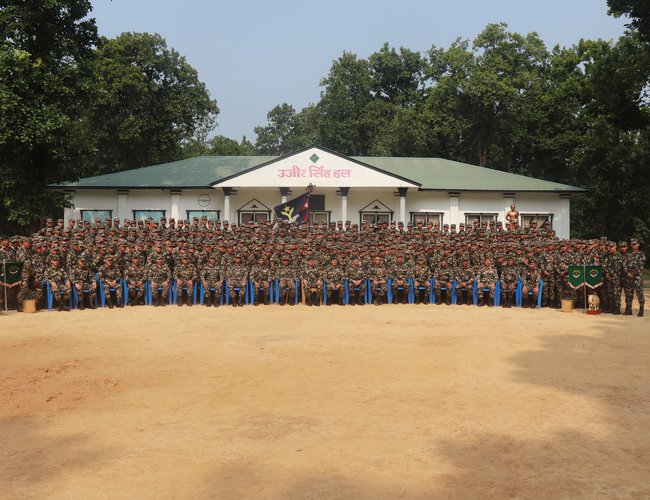
Kathmandu, Nov. 24: The joint training exercise "SURYA KIRAN-XVII" of Nepali Army and Indian Army is starting from 24 November 2023 in Pithoragarh, India. The Nepalese army team that will participate in the exercise, which will be attended by the…
New Delhi, May 5: Indian Prime Minister Narendra Modi will be the guest of honour for this year’s Bastille Day Parade in Paris scheduled to take place on July 14. In a statement, the Ministry of External Affairs (MEA) of…